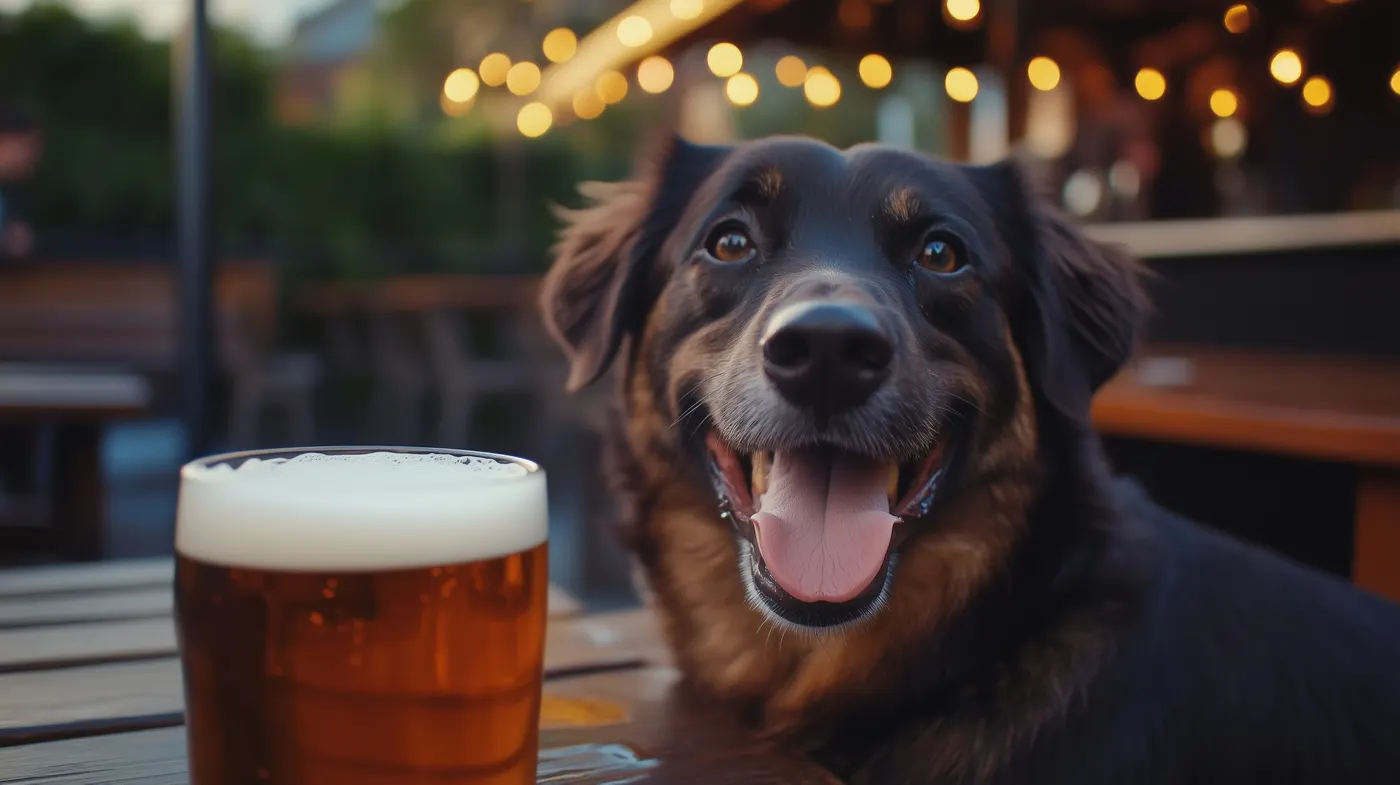
- Beer gardens are the clearest yes. NSW law explicitly permits dogs in genuinely outdoor, unenclosed dining areas — at the venue’s discretion.
- Front bars are the big grey area. Common in practice, especially in inner-city pubs. Not explicitly authorised by food safety law. Can disappear overnight after a single complaint.
- Indoor bistros are usually a no. Food safety rules don’t provide a mechanism for dogs in enclosed areas where food is served.
- Pokies areas are effectively never. The combination of gaming regulation, food service, and insurance makes this a universal exclusion.
- “Dog friendly” is not a single state. It’s a set of conditions — which area, which entrance, what time, what restrictions. Dog Happiness helps by showing where your dog can actually go, not just whether a venue says yes.
Why the Rules Feel So Inconsistent
You’ve probably noticed the pattern. One pub says dogs are welcome everywhere except the bistro. The next says beer garden only. A third allows the front bar. A fourth bans dogs entirely — even though it’s two doors down from a pub where dogs sit under the bar stools every Sunday afternoon.
The inconsistency is real, but it’s not random. It almost always comes down to a combination of: what the law actually says, how the venue is laid out, whether anyone has ever complained, whether the venue is part of a larger group, and how much the operator is willing to communicate.
Two separate legal frameworks interact in NSW — and the confusion starts with the fact that there isn’t really one simple dog-friendly venue rule. There are overlapping rules that venues interpret differently. The Companion Animals Act prohibits dogs near food areas in public places but creates an exception for outdoor dining. The Food Standards Code prohibits animals in food premises but permits pet dogs in outdoor areas that are genuinely unenclosed, at the venue’s discretion. These frameworks overlap, sometimes conflict, and leave significant grey space — especially around indoor drinking areas.
The result: venues make different calls based on the same set of rules, and dog owners are left guessing.
The Clearest Yes: Beer Gardens and Outdoor Areas
Outdoor space is where law, layout, and commercial logic all align. Beer gardens dominate dog-friendly venue data for a reason — they are the clearest category under both NSW legal frameworks. The Food Standards Code explicitly permits dogs in outdoor dining areas that are not enclosed. The Companion Animals Act creates a matching exception.
For venue operators, the beer garden is also the easiest space to manage dogs in. Dogs are visible, contained, away from kitchens and food prep, and easier to clean up after. The area often has its own entrance, which means dogs don’t need to pass through indoor spaces. And there’s a commercial logic: outdoor areas are often underutilised, especially on weekdays. Welcoming dogs drives foot traffic, longer stays, and repeat visits.
If a venue says “dogs welcome” and doesn’t specify where, assume the beer garden. It’s almost always where the permission starts and often where it ends.
Why the Front Bar Is Such a Grey Area
This is the part most guides skip — and it’s the part that matters most if you’re a dog owner who likes pubs.
Many Sydney pubs allow dogs in the front bar. Walk through Newtown, Marrickville, Surry Hills, or Balmain on a Sunday afternoon and you’ll find dogs under bar stools, beside tables, next to their owners nursing a schooner. It’s normal. It’s expected. It feels like the way things should be.
But it is not explicitly authorised by the Food Standards Code. The outdoor dining exception is the only provision that permits pet dogs in food premises. A front bar is indoor. If food is ever served or consumed there — and in most pubs, it is — the general prohibition technically applies.
Front bars persist as dog-friendly because enforcement in NSW is complaint-driven. Councils don’t routinely inspect for dogs during food safety checks. They act when someone complains. In suburbs where dog culture is strong and community tolerance is high, complaints are rare, and the arrangement holds. In documented cases across Sydney, Brisbane, and Melbourne, venues that allowed dogs inside for years changed policy permanently after a single complaint triggered council action.
What this means for dog owners: if a pub allows dogs in the front bar, that’s a real and valuable thing. But it’s also more fragile than beer garden access. It could change. Dog Happiness notes front-bar access separately from outdoor access for this reason — so you know what to expect before you arrive.
Why Bistros and Pokies Are Different
These are the two areas most venues are least willing to negotiate on.
Indoor bistros and dining rooms sit on the other side of the line that most venues won’t cross. Food is prepared and served in an enclosed space. The legal position is clear: the Food Standards Code does not provide a mechanism for dogs in enclosed areas where food is handled. Very few venues in NSW allow dogs in their bistro or dining room, and those that do are taking a significant compliance risk.
Gaming areas are effectively always off-limits. There’s no single “no dogs in pokies” law, but gaming rooms carry their own regulatory weight — restricted access, harm minimisation requirements, specific licensing conditions, and food service. The combination makes dogs practically impossible.
For dog owners, these are the two most useful exclusions to know before you go. If a pub says “dog friendly,” assume the bistro and pokies are excluded unless you’re told otherwise.
Why One Pub Says Yes and Another Says No
Even on the same street, two pubs can have completely different dog policies. The reason usually comes down to a handful of factors.
- Layout. A pub with a beer garden accessible via a side gate can offer dog access cleanly. A pub where the only outdoor area is reached through the indoor dining room has a structural barrier — under the Companion Animals Act, dogs must be able to reach outdoor dining areas without passing through enclosed spaces.
- Complaint history. A venue that has received a complaint to council — even once, even years ago — may operate more cautiously from that point on.
- Group vs independent. Multi-venue operators tend to apply standardised, more conservative policies across their portfolio. An independent publican can make their own community-informed call.
- Community fit. In dog-dense suburbs — Inner West, Surry Hills, Paddington, Northern Beaches — dog-friendliness is a commercial advantage and a community expectation. The pub dog day scene is concentrated in exactly those areas, and it reinforces the culture. In areas with different demographics or less outdoor drinking culture, the incentive is weaker.
- Risk appetite. Some operators view the commercial upside of dogs as clearly worth the modest compliance risk. Others don’t want the operational complexity — managing complaints between dog and non-dog customers, cleaning, monitoring behaviour, communicating rules.
Why Cafés Feel Different
Cafés are usually simpler on access and warmer on the little gestures.
Cafés typically offer a binary: dogs welcome at outdoor tables, or not. They rarely have the layered zone complexity of pubs — no beer garden vs front bar vs bistro vs pokies distinction. The question is usually: can my dog sit with me at the footpath table? And the answer, for most cafés with outdoor seating, is yes.
But cafés are more likely to offer dog-specific touches — water bowls, dog biscuits, puppuccinos, even dedicated dog menus. The café service model is more personal, the cost of a dog treat is negligible, and the social media value is significant. A photo of a dog with a puppuccino generates more organic reach than most paid advertising.
What Dog Owners Should Actually Look For
The easiest way to avoid an awkward surprise is to look for signals that a venue has actually thought through dog access.
- Clear wording about which area. “Dogs welcome in the beer garden” is much more useful than “dog friendly.” Look for venues that specify where.
- A side gate or separate outdoor entrance. This usually means the venue has thought about dog access properly — dogs can reach the outdoor area without passing through indoor spaces.
- Whether the outdoor area is truly outdoor. An area with café blinds or a retractable awning may technically become “enclosed” when the blinds go down — which affects whether dogs are permitted. This matters most in winter.
- Whether food is served in the dog-friendly area. Food service in a beer garden is common and doesn’t disqualify the area — the outdoor dining exception covers this. But it’s useful to know.
- Whether there are time restrictions. Some venues welcome dogs during the day but not during evening service or late-night trading.
- Whether the venue actively welcomes dogs or just tolerates them. Water bowls, treats, dog menus, and social media featuring dogs are strong signals. A venue that merely “allows” dogs is a different experience from one that celebrates them.
What Dog Happiness Does Differently
Most venue guides treat “dog friendly” as a simple yes or no. In practice, it’s usually more specific than that.
Where confirmed or clearly identified, Dog Happiness shows you the detail that actually matters:
- Which areas are dog-friendly — outdoor beer garden, courtyard, front bar, footpath, or the whole venue
- What’s excluded — bistro, pokies, indoor dining, specific zones
- How to get there — main entrance, side gate, separate outdoor access
- What conditions apply — leash required, ground only, time restrictions
- How welcoming the venue actually is — treats, water bowls, dog menus, or just tolerance
The goal is to reduce the guesswork before you arrive.
The Big Picture
The inconsistency in dog-friendly venue rules is real. But it’s not random.
It usually reflects a combination of law, layout, enforcement history, operator philosophy, and community. The venues that get it right are not just the ones that allow dogs — they’re the ones that are clear about where, when, and how.