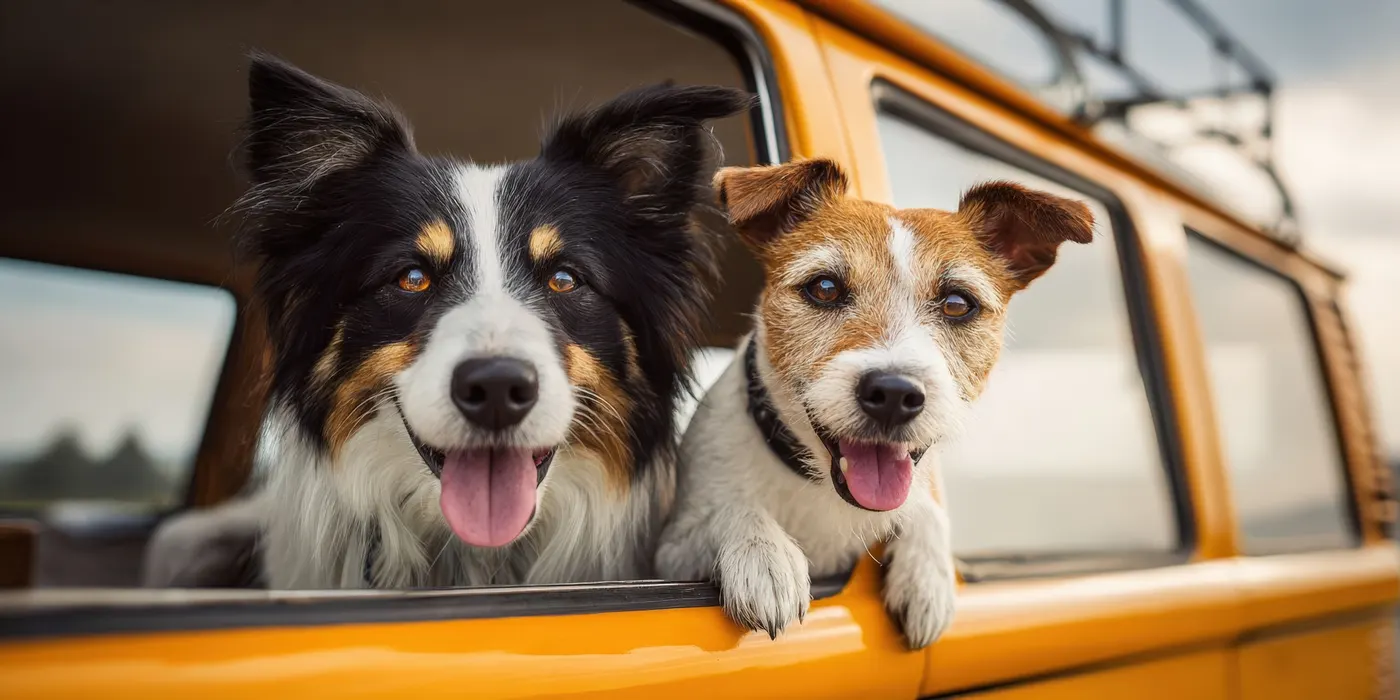
- Happy is not always high-energy. Some of the clearest signs of wellbeing are quiet ones — a deep sigh, a calm settle, undisturbed sleep.
- Five things matter most: connection with their people, sniffing and exploration, play that suits the dog, choice and agency, rest and routine.
- The best indicator that something worked: recovery. A dog who comes home and settles deeply had a good experience. A dog who can’t settle was probably overwhelmed.
- Some common “happy” behaviours are easy to misread. Tail wagging, panting, zoomies, and belly-up can all mean something other than joy.
- The best environment is the one your dog comes home from and sleeps well after — not the one that looks impressive on paper.
The Things That Actually Matter
Dog happiness isn’t one big thing. It’s built from a collection of smaller things, done well and done consistently.
Connection with their people. When dogs and owners look into each other’s eyes, both experience a rise in oxytocin — the same hormone involved in the bond between parents and babies. The bond between you is biochemically real, and it goes both ways. Connection extends beyond the household, too — breed meetups and dog community events are where many dogs and owners both find their people. But connection isn’t about constant attention. A few minutes of calm, undivided presence can mean more than hours of distracted proximity. Dogs don’t just register your presence. They register your emotional state.
Sniffing and exploration. Dogs have up to 300 million olfactory receptors compared to our six million. When a dog stops at a lamp post, they’re reading. A study found dogs practising regular nosework showed more optimistic responses in cognitive tests. Sniffing provides mental stimulation, has a calming effect, and gives dogs something most don’t get enough of: a sense of control. A beach at low tide, a woodland path after rain, a quiet corner of a park with long grass — these are rich sensory landscapes.
Movement and play that suit the dog. A retriever splashing into a river. A scent hound methodically working a trail. A Greyhound who sprints for thirty seconds and sleeps all afternoon — that’s their rhythm, not laziness. What matters is fit, not intensity. Watch for dogs who play with a loose body, take natural pauses, and settle easily afterward.
Choice and agency. Letting a dog choose the direction on a walk. Offering two toys. Not pulling them away from a smell the moment they stop. Animals with more control over their environment show lower stress and quicker recovery. This doesn’t require a training overhaul — just noticing the small moments where your dog is making a choice, and letting it matter.
Rest and routine. Adult dogs need 12–14 hours of sleep a day. Puppies may need 18–20. Dogs who can predict the rhythm of their day tend to be calmer between events. It’s not about a rigid schedule — it’s about a recognisable pattern that tells the dog: you can relax now.
How to Tell If It’s Working
Clearer signs: A relaxed, loose body. Soft eyes. An open mouth with a relaxed jaw. A tail wagging in broad, sweeping arcs. Willingness to play and explore without desperation.
Quieter signs: A deep sigh before lying down. Slow blinking. Choosing to rest in the same room without needing to be on top of you. Deep, undisturbed sleep. A full-body stretch on waking.
Best overall signal: recovery. A dog who plays at the park and comes home to sleep deeply had a good time. A dog who comes home panting and pacing for hours was probably overwhelmed. If the cool-down goes well, the workout was right.
Behaviours That Are Easy to Misread
- Tail wagging is not always happy. A broad, loose, mid-height wag is generally a good sign. A tail held high and wagging fast and stiff can signal tension. A low, slow wag may indicate uncertainty. The tail is part of the conversation — not the whole sentence.
- Panting after exercise is straightforward. Panting at rest, in a cool room, with no recent exercise is worth noticing. A stress pant often has the lips pulled back tighter, alongside yawning, whale eye, or pacing.
- Zoomies are usually joyful. But zoomies after a stressful event — a bath, a vet visit — may be tension discharge. What happens afterward matters most: a contented flop is good; pacing and panting is less clear.
- Rolling on their back is usually an invitation — wiggly body, soft eyes, voluntary approach. But a stiff body, frozen posture, and tucked tail mean appeasement, not invitation. Try a few strokes and stop. If they nudge for more, it was contact. If they freeze, it was space.
What Can Quietly Get in the Way
- Too much stimulation, not enough recovery. Stress hormones can stay elevated for hours after an overstimulating experience. A dog who never properly comes down has a baseline that’s quietly creeping up.
- Owner stress. This isn’t about guilt — just a reminder that dogs are deeply tuned in to the emotional climate around them. Their cortisol levels can mirror yours over time. When you take care of yourself, your dog feels it too.
- Outings that don’t suit the dog. A packed dog park isn’t enriching for every dog. The best outing is the one your dog comes home from and settles easily.
- Constant enrichment without enough calm. Puzzle feeders, training, scent games, a dog working on a good bone, even the gross stuff — all wonderful, all enrichment. But if a dog’s day is nothing but stimulation, they may never fully switch off. Rest is as important as enrichment.
For Puppies: What Matters Most
- Positive socialisation during the sensitive period up to around 14–16 weeks — calm, pleasant encounters they can process without being overwhelmed. Quality over quantity.
- Gentle exposure, not flooding. If a puppy seems worried, that’s information. Pushing through fear creates lasting negative associations.
- Routine and rest. An overtired puppy doesn’t wind down — they ramp up. Structured rest and predictable rhythms are among the most important things a new owner can provide.
- Learning to settle. A puppy who settles well becomes an adult dog who can relax in cafés, rest while you work, and recover after outings — a happier dog.
The Big Picture
Dog happiness is built from simple things done well. Connection. Exploration. Play that suits the individual. Rest and routine. Small choices that give them a sense of control. A first trip to a farm, a quiet morning at a new park, a long settle after a good walk. Environments that match the dog, not just the owner’s ambitions.
One of the clearest signs of a happy dog is also one of the quietest: the ability to settle, to sigh, and to sleep — because they know, in their bones, that everything is fine.