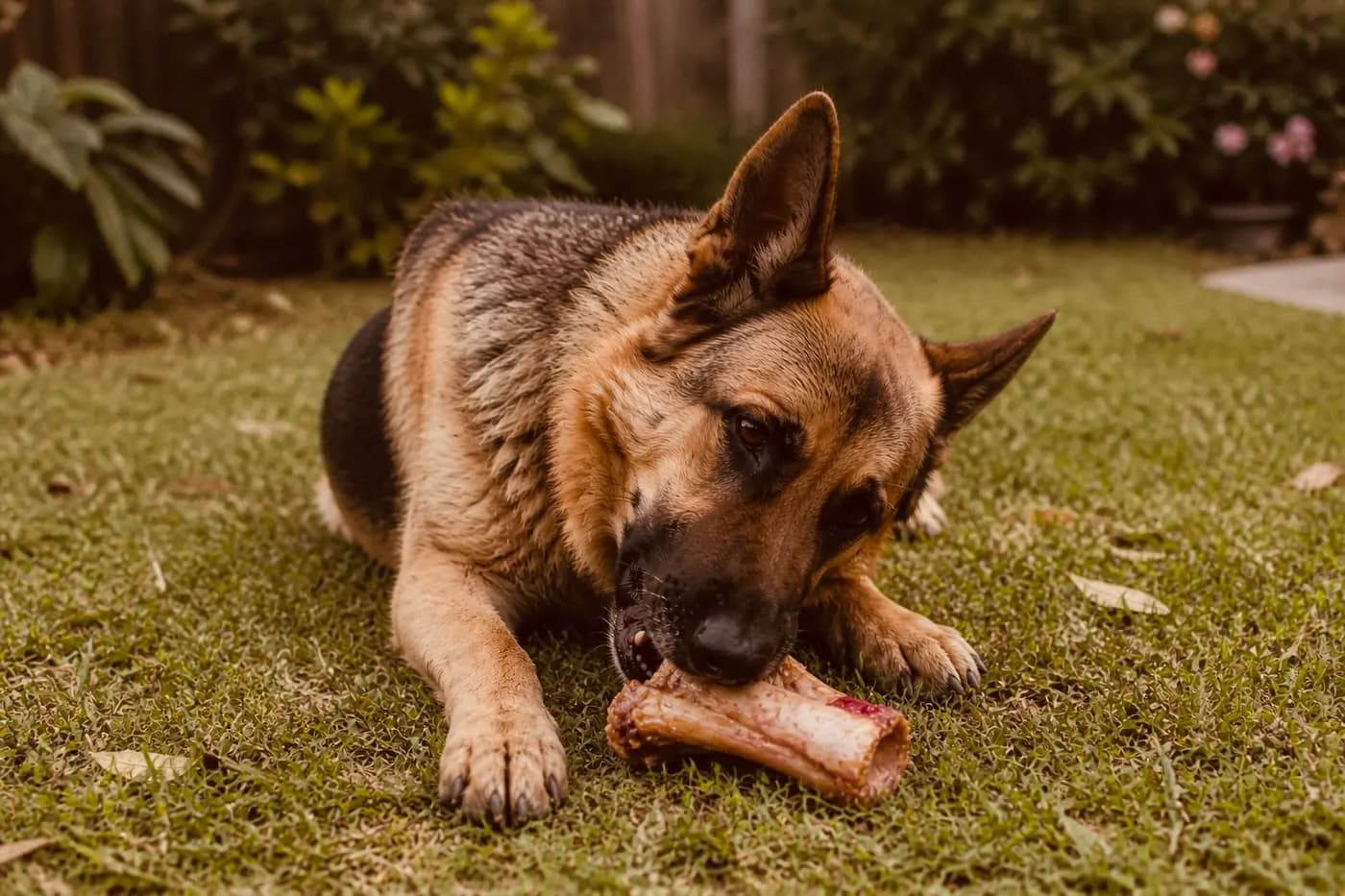
- Chewing releases endorphins and calms the nervous system — it’s one of the most reliable self-soothing behaviours dogs have
- Not all bones are safe. Cooked bones are never safe. Raw bones carry real risks too.
- Marrow bones are popular but rich — they can cause digestive upset in some dogs
- Weight-bearing bones from large animals (femurs, knuckle bones) can fracture teeth
- Safer alternatives exist: dental chews, bully sticks, rubber toys, frozen Kongs
- Always supervise. Always match the chew to your dog’s size and chewing style.
Why Chewing Makes Dogs Happy
Chewing isn’t just something dogs do because they’re bored or hungry. It’s a deeply wired behaviour with genuine neurological effects. The repetitive motion of chewing triggers the release of endorphins — the same feel-good hormones that make exercise satisfying for humans. It calms the nervous system, reduces anxiety, and helps dogs self-regulate when they’re stressed, overstimulated, or just need to decompress.
Behaviourists describe chewing as part of a “trifecta of calm” alongside sniffing and licking — three natural behaviours that help dogs soothe themselves. A dog working on a bone after a big walk or a stimulating outing isn’t just keeping busy. They’re actively processing the experience and settling back into a calm state. If you’ve ever noticed that your dog sleeps deeply after a good chewing session, that’s not coincidence — it’s the endorphins doing their job.
This is why access to appropriate chewing opportunities genuinely matters for dog happiness. A dog who never gets to chew on anything satisfying is missing one of their most basic calming tools.
The Honest Guide to What’s Safe — and What’s Not
This is where the topic gets complicated, and where Dog Happiness owes you honesty rather than a simple answer.
Never Safe: Cooked Bones
This one is non-negotiable. Cooked bones of any kind — chicken, lamb, pork, beef — should never be given to dogs. Cooking makes bones brittle. They splinter into sharp fragments that can puncture the mouth, throat, stomach, or intestines. The FDA has issued warnings specifically about the dangers of cooked bone treats. This includes bones from your roast dinner, barbecue leftovers, and commercial “bone treats” that have been smoked or baked.
Raw Bones: Benefits and Real Risks
Raw bones are the traditional option, and many dogs thrive on them. They’re less likely to splinter than cooked bones, they contain marrow (rich in fat, calcium, and minerals), and the gnawing action does genuinely help clean teeth and exercise the jaw.
But they’re not risk-free, and it’s important to be honest about that.
The risks of raw bones include: fractured teeth (especially from weight-bearing bones like beef femurs, which are extremely hard), bacterial contamination (Salmonella, E. coli — a risk to both dogs and humans in the household), digestive upset (marrow is very rich and can cause diarrhoea or trigger pancreatitis in susceptible dogs), choking on fragments, and intestinal obstruction if large pieces are swallowed.
Which Bones — and What Each One Is Actually Good For
Not all bones are the same. The animal it comes from, the part of the body, and whether it’s a “long bone” (legs, femurs — hard, cylindrical, marrow-filled) or a “flat bone” (ribs, shoulder, brisket — softer, flatter, less marrow) all change what your dog gets out of it.
Lamb and goat bones — the vet-recommended sweet spot. Lamb bones are hard enough to scrape plaque and clean teeth, but not as dense as beef bones — so they’re far less likely to fracture teeth. Vets who recommend raw bones almost universally point to lamb or goat as the ideal choice. Lamb shanks work well for medium to large dogs. Lamb ribs are softer (flat bones), making them a better option for dogs with weaker or worn teeth. Feed raw, 1–2 times per week. These are the bones most likely to give your dog a good chewing session with the least risk.
Beef marrow bones (femurs, shanks) — popular but problematic. These are the big, heavy leg bones you see at the butcher, sawn into rounds with the marrow exposed. Dogs love them — but the bone itself is extremely hard. Weight-bearing beef bones are denser than dogs’ teeth, and the American Veterinary Dental College warns against them as a fracture risk. The marrow is also very rich and high in fat, which can cause diarrhoea or trigger pancreatitis in sensitive dogs. In practice, most dogs spend their time licking the marrow out rather than chewing the bone itself — so the dental benefit is limited compared to meaty lamb bones. If you do feed them, limit the session to 10–15 minutes, and consider scooping out some of the marrow first if your dog has a sensitive stomach.
Beef ribs and brisket bones — a better bet than marrow bones. These are “flat bones” — softer than leg bones, with less marrow, and dogs can actually chew them rather than just lick them. That means more dental benefit, more jaw exercise, and less digestive richness. Beef brisket bones are a solid middle-ground option for dogs who love beef but shouldn’t have the hard marrow bones. They’re easier on teeth and easier on bowels.
Chicken and turkey bones (raw necks, wings, frames) — nutritious but not enriching. Raw poultry bones are soft enough for dogs to chew up and consume entirely. They’re a good source of calcium and phosphorus, and they’re a staple in raw diets. But they’re too soft to provide meaningful dental cleaning — your dog will crunch through them in minutes, with none of the extended chewing session that releases endorphins and cleans teeth. For nutrition, they’re excellent. For happiness and enrichment, they don’t offer much.
Pork bones — generally avoid. Pork bones have a higher risk of splintering even when raw, and can carry parasites. Most vets recommend steering clear.
The Dental Truth: It’s the Meat, Not the Bone
Here’s the detail most bone guides miss: the real dental benefit comes from your dog pulling meat, gristle, and cartilage off the bone — not from gnawing on bare bone. The action of stripping tissue off a meaty bone is functionally similar to flossing. It cleans between and around teeth in ways that chewing on a clean, stripped bone doesn’t.
This means a meaty lamb shank with sinew and connective tissue still attached is far better for dental health than a bare, clean marrow bone from the butcher. It’s messier, yes — but it’s doing the actual work. Aim for about 30 minutes of chewing, 2–3 times a week, for a noticeable improvement in dental health.
General Rules If You Feed Raw Bones
- Choose bones appropriate for your dog’s size — roughly the size of their head, so they can’t swallow them whole
- Supervise the entire time. Remove the bone after 10–15 minutes for marrow bones, up to 30 minutes for meaty lamb or beef rib bones.
- Refrigerate between sessions. Discard after 3–4 days.
- Avoid weight-bearing bones from large animals (beef femurs, beef shanks) if your dog is a power chewer
- Don’t give marrow bones to dogs prone to pancreatitis or sensitive stomachs
- Never give bones to dogs who try to swallow large pieces or bite bones in half
Safer Alternatives That Still Satisfy
For dogs or households where natural bones aren’t practical, these deliver the chewing satisfaction with less risk.
Dental chews with the VOHC (Veterinary Oral Health Council) seal have been independently tested for dental effectiveness and safety. Bully sticks (dried beef pizzle) are highly digestible, long-lasting, and most dogs love them. Rubber chew toys like Kongs can be stuffed with food and frozen for a combined chewing-and-licking challenge — no splintering, endlessly reusable. Antlers (deer or elk) are very long-lasting but extremely hard — some vets caution they can still fracture teeth. Frozen carrots or sweet potato work for lighter chewers and puppies.
Matching the Chew to the Dog
Power chewers (Labs, Staffies, Pit Bulls, large terriers) bite down hard and try to destroy. Avoid natural bones entirely or choose very large raw knuckle bones they can’t crack. Rubber toys and bully sticks are often better options.
Moderate chewers (Golden Retrievers, Spaniels, many medium breeds) gnaw rather than crunch. Raw lamb bones under supervision work well. Dental chews and bully sticks are reliable standbys.
Light chewers (many small breeds, companion breeds, older dogs) lick and nibble more than chomp. Dental chews, frozen Kongs, and softer options like frozen carrots are usually perfect.
Puppies — puppy teeth are fragile. Stick to puppy-specific chews, frozen washcloths for teething, and soft rubber toys. No hard bones until adult teeth are fully in.
The Resource Guarding Question
Some dogs become possessive over bones — growling, stiffening, snapping when approached. A bone is one of the highest-value items a dog can possess, and the instinct to protect it runs deep.
If your dog guards bones, the answer isn’t to stop giving chews. It’s to address the guarding behaviour with a qualified trainer, and in the meantime manage the environment: chewing in a separate room, trading up with a higher-value treat rather than reaching for the bone. A dog who learns that humans approaching means something even better is coming can enjoy their chew in peace.
The Simple Version
A dog with access to safe, appropriate chewing opportunities is a calmer, more settled, happier dog. The endorphin release is real. The dental benefits are real. The enrichment value is real. The key is choosing the right chew for your dog’s size, style, and temperament — and being honest about the risks that come with natural bones.
When in doubt, a frozen Kong stuffed with peanut butter is never wrong.