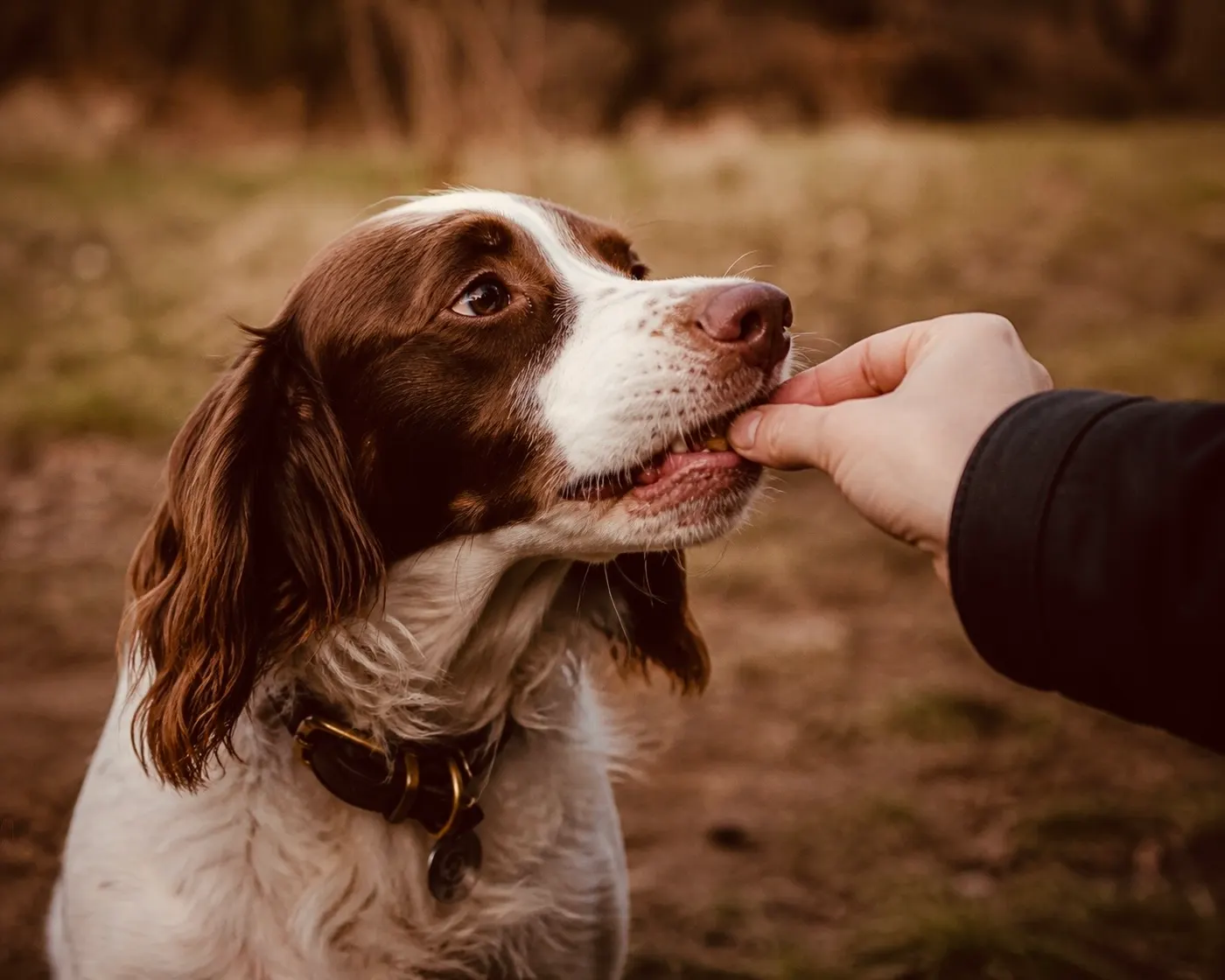
- Treats work because they trigger dopamine — the anticipation of a treat may be more rewarding than the treat itself
- Reward-based training using treats is the most effective and humane method. The science is unambiguous on this.
- The 10% rule: treats should make up no more than 10% of your dog’s daily calories. Most owners massively underestimate how quickly this adds up.
- A single cube of cheese for a small dog is the caloric equivalent of a Big Mac for a human
- Treats can create problems: begging, food fixation, resource guarding, and obesity
- The best treat is often not food at all — praise, play, and access to experiences can be equally rewarding
Why Treats Work: The Dopamine Hit
When your dog sees a treat, their brain releases dopamine — the neurotransmitter associated with pleasure, motivation, and anticipation. Here’s the fascinating part: research suggests the dopamine spike is often bigger during the anticipation of a reward than during the reward itself. Your dog reaching for the treat you’re holding may be experiencing more pleasure than the moment they eat it.
This is why treats are so effective for training. The dog performs a behaviour, anticipates the reward, gets the dopamine hit, and the behaviour is reinforced. Positive reinforcement using treats is the most effective and humane training method available — the science on this is settled. Studies consistently show reward-based methods lead to better obedience, faster learning, and more reliable behaviour than punishment-based alternatives. Dogs trained with aversive methods show higher cortisol, more stress behaviours, and in one study were measurably more pessimistic about the world.
Treats aren’t bribery. They’re communication. They tell your dog: that thing you just did — do it again.
Where Treats Go Wrong
The problems with treats are almost never about the treats themselves. They’re about how, when, and how many.
The Weight Problem
This is the big one. Treats should make up no more than 10% of your dog’s daily calories — the 90/10 rule. Nearly 60% of dogs are classified as overweight or obese, and excess treats are a major contributor.
The maths is sobering. A 5kg Yorkshire Terrier needs about 180 calories per day. Ten percent of that is 18 calories — roughly one small training treat. A single cube of cheddar cheese is about 69 calories. For that Yorkie, that’s nearly four times their entire treat budget — the caloric equivalent of a human eating a Big Mac as a snack.
For an 35kg Labrador needing about 1,400 calories per day, the treat budget is 140 calories. That sounds generous until you realise a single large milk bone biscuit is about 85 calories, a tablespoon of peanut butter is about 95, and a dental chew can be 70–100. One of each and you’ve blown through twice the daily treat allowance. Cafe puppuccinos and pup cakes count too — we’ve rounded up the best dog menus in Sydney, but they’re an occasional treat, not a daily staple.
The fix isn’t complicated: know your dog’s daily calorie needs, read the calorie content on treat packaging, and actually count. Most owners don’t, and the treats add up invisibly over months and years. Weight is the single biggest longevity lever you can pull — and treats are where most of the invisible extra calories come from.
The Begging Problem
Dogs who get treats unpredictably — a scrap from the dinner table here, a random biscuit there — learn that pestering works. They don’t know when the reward will come, so they try constantly. This is variable reinforcement, and it’s the most powerful schedule for maintaining a behaviour. Casinos use the same principle.
The irony is that the owner thinks they’re being kind by sharing food. The dog experiences a life of low-grade frustration punctuated by random wins. That’s not happiness. That’s a slot machine.
The fix: treats should be earned or given at predictable times. Training treats reward specific behaviours. Enrichment treats (Kongs, puzzle feeders, bones) are given in specific contexts. Table scraps are either always given (predictable) or never given (clear boundary). The ambiguity is what creates the problem.
The “Won’t Do It Without a Treat” Problem
A common complaint: “My dog only listens when I have food.” This usually means the treats are being used as a lure (showing the food before the behaviour) rather than a reward (giving the food after the behaviour). In training terms, the treat hasn’t been faded properly.
Good treat-based training follows a progression: lure with the treat visible → reward with the treat hidden → reward intermittently → replace food with praise, play, or life rewards (going through the door, getting the lead on, access to a sniff spot). The end goal isn’t a dog who works for food. It’s a dog who works because the behaviour itself has become rewarding — with treats used to get there.
The Treats That Actually Matter
Here’s the Dog Happiness perspective: the best treat is often not food.
Food treats are effective, convenient, and important for training. But if food is the only way you reward your dog, you’re missing the bigger picture. Dogs are motivated by much more than calories.
Praise — spoken warmly and with genuine enthusiasm — activates reward centres in the dog brain. Research shows that praising words combined with praising intonation light up the same regions as food rewards. Your voice matters. (For the full science on how praise activates your dog’s brain, including the Emory study where some dogs chose praise over food, see the deeper coverage in the Love article.)
Play — a game of tug, a chase sequence, a ball throw — can be as rewarding as food for many dogs, and doesn’t add calories.
Access to experiences — a new park, a sniffing walk, being included on an outing — these are “life rewards” that dogs value deeply. Letting your dog sniff a particularly interesting tree for an extra 30 seconds after a good recall is a reward. It doesn’t cost anything and it doesn’t make them fat.
Social connection — time with you, time with other dogs, time with other animals — is rewarding in itself. The Dog Aging Project found social companionship had five times more impact on health than financial factors.
The point isn’t to stop using food treats. It’s to recognise that a treat is one tool in a much larger kit. A dog whose life is rich in praise, play, novel experiences, and social connection doesn’t need a constant stream of biscuits to be happy.
Using Treats Well: The Short Version
- Know your dog’s calorie budget. 10% of daily intake, maximum.
- Use tiny treats for training. Your dog doesn’t know the difference between a large treat and a small one. They care about frequency, not size.
- Use kibble as treats. Set aside some of your dog’s daily food for training rewards. Same calories, zero extra.
- Earn, don’t beg. Treats come after behaviours or at set times, not in response to pestering.
- Fade the food. Build toward praise, play, and life rewards so your dog isn’t dependent on food alone.
- Read the packet. Know how many calories are in each treat. You’ll be surprised.
- Healthy alternatives. Frozen carrots, blueberries, small pieces of apple (no seeds), plain cooked chicken. Low calorie, high value for most dogs.
Treats are wonderful. The look on your dog’s face when they know one is coming is pure, uncomplicated joy. The question isn’t whether to use them — it’s whether you’re using them in a way that adds to your dog’s happiness over a lifetime, or slowly takes from it.