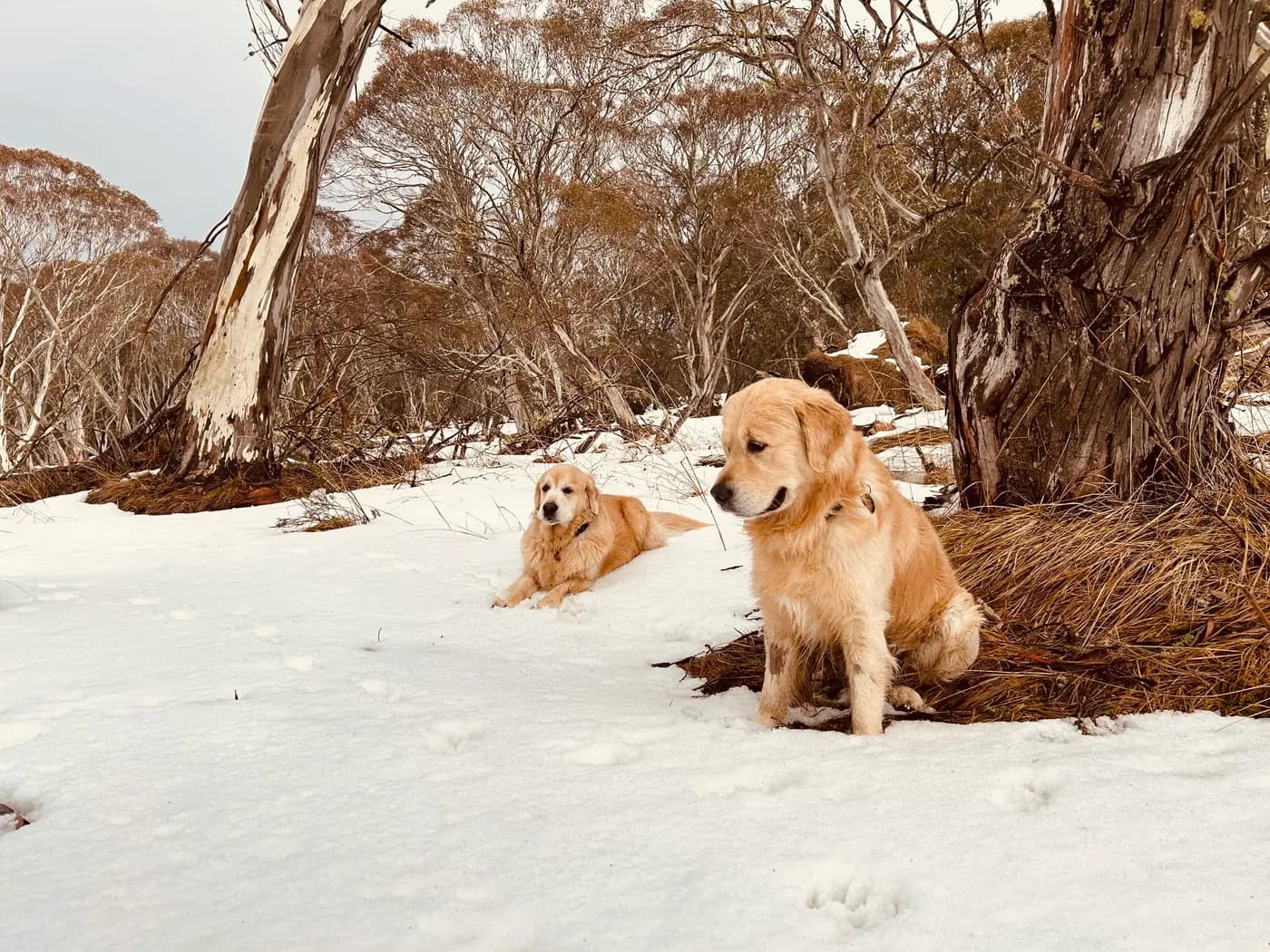
- Most ski resorts sit inside national parks — dogs can’t go
- Dinner Plain (VIC) is the only dog-friendly alpine resort in Australia
- Corin Forest Snow Dogs (ACT) runs dedicated dog sessions each September — closer and more accessible from Sydney
- Blue Mountains, Oberon, and Jindabyne get occasional snow — chase it when it falls
- Keep first sessions short, have a warm retreat ready, and let your dog set the pace
Why Snow Is Special
Snow triggers some of the most uninhibited joy you’ll ever see from a dog. The zoomies through powder. The digging. The face-first plunging. The confused look when they try to eat it and it disappears. For a dog who’s never experienced a cold-weather environment, snow is a complete sensory reset — new textures underfoot, new smells (cold air carries scent differently), new sounds (the crunch, the silence). It’s pure novelty enrichment, and novelty is one of the strongest tools for building a happier, more resilient dog.
That said, not every dog loves it immediately. Some are cautious. Some hate wet paws. Some take one look at the white stuff and want the car. The first trip should be about offering the experience, not forcing it — the same way you’d approach meeting farm animals for the first time.
Where to Go
Here’s the challenge: almost every ski resort in Australia sits inside a national park — Thredbo and Perisher in Kosciuszko (NSW), Falls Creek and Mt Hotham in the Alpine National Park (VIC) — and dogs are banned from all of them. Mt Buller only grants permits to residents, not visitors. That rules out the obvious options. But there are more ways to get your dog into the snow than most people realise.
Dinner Plain, Victoria — The Only Dog-Friendly Alpine Resort
Dinner Plain is it. The only alpine resort in Australia where visiting dogs are welcome without a permit. Located 10km from Mt Hotham in Victoria’s High Country, the village welcomes dogs on-lead year-round. No special registration needed — just your regular council rego.
In winter, the village basketball courts become an unofficial snow dog park — snow-covered and full of wagging tails. You can walk shared trails inside the village (Fitzy’s Cirque, Collector’s Cirque, the Montane Loop across the Great Alpine Road), but dogs cannot leave the village and enter the Alpine National Park. This is strictly enforced.
Dog-friendly accommodation is available but books out months ahead — if you’re planning a winter trip, book as early as possible. Many dog owners stay in Bright instead, about 90 minutes down the mountain. It’s cheaper, has more dog-friendly dining (cafés, breweries, King Valley wineries nearby), and you can day-trip up to Dinner Plain for the snow.
Eating out with your dog at Dinner Plain is where it gets real. The three main venues — Dinner Plain Hotel, Hotel High Plains, and Club Wyndham’s Element restaurant — all allow dogs outside. But the ground freezes. Your dog is standing on ice. Bring a blanket or mat for them to lie on. Hotel High Plains and Element both have outdoor firepits, which helps. One of the pubs also allows dogs inside conditionally — quiet seating away from the food area — but heated indoor options for dogs are limited. Plan to retreat to your accommodation for warmth.
Howling Husky Sled Dog Tours operate from Dinner Plain in winter — sled rides pulled by rescue huskies, plus meet-and-greet sessions. You can’t bring your own dog on the sled, but watching a team of huskies work through the snow is an experience in itself. The annual Dinner Plain Sled Dog Sprint each August is a spectator highlight.
Getting there from Sydney: About 7 hours by car. Snow chains are legally required in Victorian alpine areas — rent them from Bright, Myrtleford, or Harrietville. If entering via Bright, you drive through Mt Hotham (no resort pass needed to transit) but dogs must stay in the car. Entry via Omeo avoids Mt Hotham entirely.
Corin Forest Snow Dogs, ACT — The Best Option for Sydney Dogs
This one is bigger than most people realise. Corin Forest, 45 minutes south of Canberra, operates a snow play area with snowmaking machines — so snow is guaranteed regardless of natural weather. Dogs aren’t normally allowed in the snow play area during the regular season. But each September, they open dedicated Snow Dogs sessions, and the event has grown significantly since launching in 2017.
In 2025, Snow Dogs expanded to three full weekends (September 13–28) with seven sessions per day running from 9am to 3pm. That’s 42 sessions across six days — no longer a niche one-off. A dedicated fenced dog snow area operates separately from regular snowplay and tobogganing, so it’s dogs-only in your section. The area is roughly dog-park sized, so your dog needs to be comfortable around other dogs.
Tickets are around $25 per person (dogs and under-2s free), on-lead, bookings essential — sessions sell out fast. Watch Corin Forest’s Facebook page from August for dates.
Why this matters for Sydney dog owners: At about 3.5 hours from Sydney (3 hours to Canberra, 45 minutes to Corin Forest), this is roughly half the drive of Dinner Plain. Machine-made snow means no weather gamble. The September timing puts it at the end of winter — milder than peak season. For a dog who’s never seen snow, a one-hour session in a fenced snow area is a perfect first exposure. Make a weekend of it in Canberra — the city has plenty of dog-friendly cafés, parks, and breweries. (Snow Dogs is also listed in our full NSW dog events calendar alongside the rest of the year’s schedule.)
Chase the Snow — Opportunistic Options Closer to Home
These depend entirely on the weather. No guarantees. But when a cold front delivers, these dog-friendly locations can give your dog a taste of the white stuff without a 7-hour drive.
Blue Mountains — Blackheath, Katoomba, Mt Victoria (NSW)
The closest option to Sydney at about 90 minutes. The upper Blue Mountains towns (800–1,050m) get frost and occasional snow 3–5 times per year, usually June to August. Snow is typically light and melts by late morning, so you need to be there early — either leave before dawn or stay overnight. Extensive dog-friendly infrastructure makes this easy: Katoomba Falls Reserve, Campbell Rhododendron Gardens in Blackheath, the Megalong Valley wineries, plus dozens of dog-friendly cafés with blankets and heaters. Follow the weather closely and be ready to go at short notice.
Oberon and Shooters Hill (NSW Central West)
About 3 hours from Sydney, the Oberon area — especially Shooters Hill — is the best spot west of Sydney for snow settling on the ground. The dog-friendly Mayfield Garden just outside Oberon looks spectacular when snow falls on its hedges and follies. Pet-friendly camping and accommodation are available around Oberon and Bathurst. Strategy: check weather reports, book a dog-friendly stay the night before, and head up early.
Jindabyne and the Snowy Mountains towns (NSW)
Jindabyne sits at 915m and gets snow settling once or twice a year in heavy falls. Dogs can’t enter Kosciuszko National Park, but Jindabyne itself is dog-friendly — lake walks, Jindabyne Brewing (dogs welcome, open daily in winter), and cafés with outdoor seating. Pet-friendly accommodation is available. Stay, watch the weather, and be ready for an impromptu snow morning. About 5–6 hours from Sydney.
Victorian locations outside national parks
For Melbourne-based dog owners: Mt Donna Buang near Warburton is state forest (not national park), dogs are allowed, and it gets snow multiple times per winter — about 1.5 hours from Melbourne. People take dogs to play in clearings off the main road, away from summit crowds. Roads approaching Lake Mountain also pass through areas outside the national park where snow sometimes settles.
How to Prepare
What to bring: A waterproof dog coat for extended time outside (remove if your dog is running hard). Extra towels. Water — cold weather is dehydrating. Treats for positive associations. A blanket or mat for frozen outdoor seating.
Booties: Opinions are divided. Most dogs don’t need them for a short first session. Worth considering for longer outings on icy surfaces, but introduce them before the trip.
Snowballs in fur: Long-haired dogs develop clumps of packed snow in belly, leg, and paw fur. Pull them off or melt with warm water. Some owners spray cooking oil on the undercarriage beforehand — widely mentioned, worth trying.
First exposure: Keep it to 10–15 minutes. Have a warm retreat ready. Let your dog set the pace. Watch for cold stress: shivering, lifting paws, reluctance to move, seeking shelter.
Safety
Antifreeze is used on driveways and doorways at alpine resorts. It has a blue tinge and smells sweet to dogs. It’s toxic. Watch for discoloured snow at Dinner Plain and any resort area.
National parks are off-limits. Alpine National Park (VIC), Kosciuszko National Park (NSW), Namadgi National Park (ACT around Corin Forest). Strictly enforced. Fines apply. Stay within village and resort boundaries.
Snow chains are legally required in Victorian alpine areas. Rent from towns en route. Check your car’s compatibility — some low-profile vehicles can’t fit chains.
Clean up in the snow. Never bury it. When the snow melts, it’s still there.
Worth the Drive
Whether it’s a planned trip to Dinner Plain, a Snow Dogs session at Corin Forest, or a spontaneous dawn dash to the Blue Mountains after an overnight frost — watching your dog experience snow for the first time is one of those pure happiness moments. The face-first plunge, the zoomies through powder, the look of total bewilderment when they try to catch a snowflake. It doesn’t last long. It doesn’t need to. That’s what makes it worth remembering.