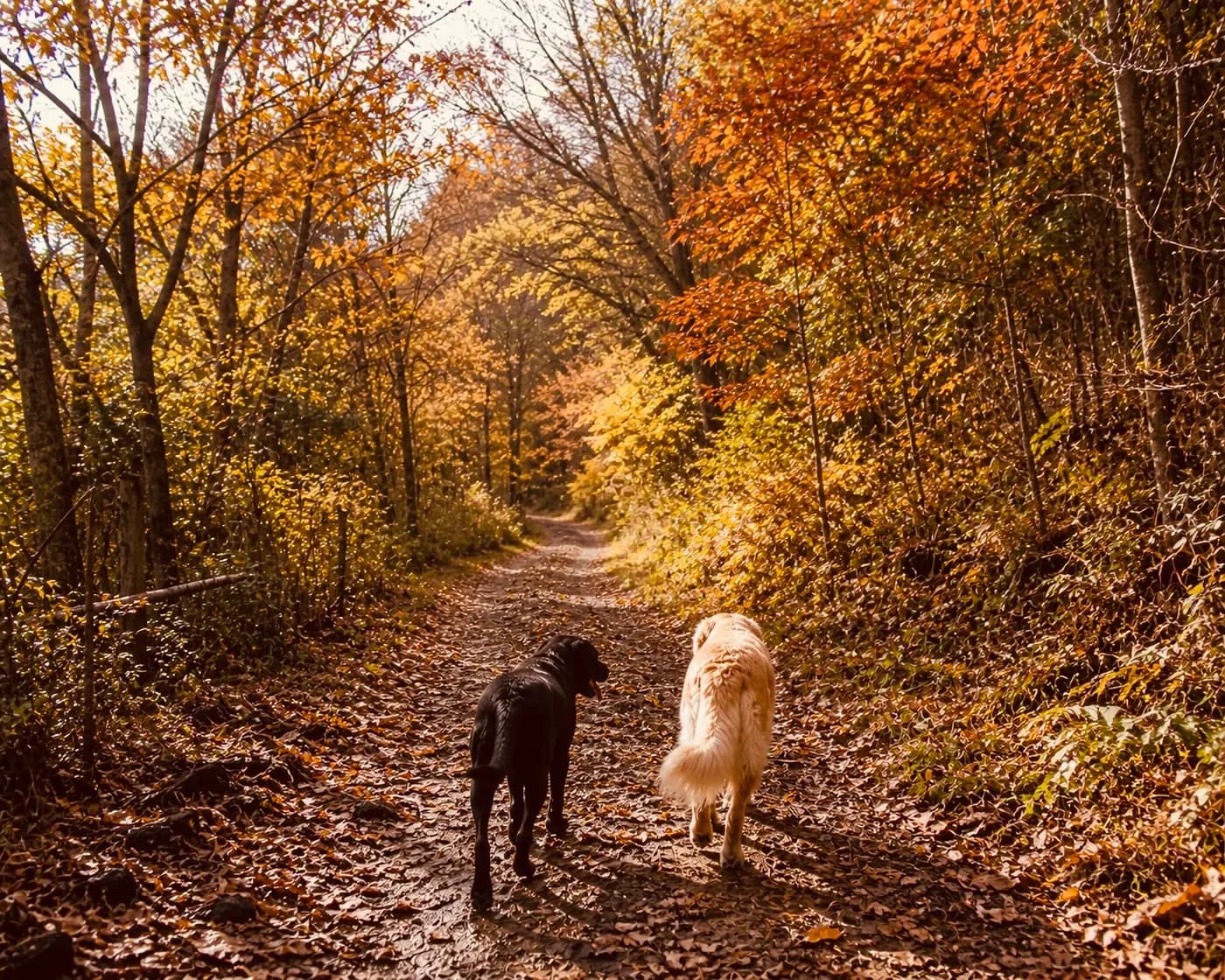
- Dogs sense seasonal change through scent, ground temperature, daylight, and barometric pressure — all before you notice the weather shifting
- Spring is sensory overload: new scents, longer days, a surge in energy that can look like misbehaviour
- Summer slows most dogs down — but hot pavement is the hidden danger (the seven-second test saves paws)
- Autumn is many dogs’ favourite season: cool enough to run, rich enough to smell, soft enough underfoot
- Winter brings lower serotonin, more sleep, and increased appetite — some breeds come alive, others retreat
- Every season has a best version. Your job is to find it for your dog.
Spring: The Sensory Explosion
When spring arrives, your dog knows before you do. The air pressure shifts. New plant growth releases scent compounds that weren’t there yesterday. Insects return. Other animals are moving. For a dog, the first warm day of spring isn’t just pleasant — it’s an information explosion.
This is when you see “spring fever.” Dogs who were calm and settled through winter suddenly have the zoomies, pull harder on the lead, and seem wired on walks. It’s not bad behaviour — it’s a dog whose nose is being flooded with new data after months of relative scent quiet. Spring air carries more volatile organic compounds from plants and soil, and your dog is processing all of it.
What to do with it: lean into the enrichment. Spring walks should be slower and sniffier than winter walks. Let your dog process the new smells rather than marching past them. This is the season where sniffing matters most.
Allergies are real. Dogs get hay fever — itchy skin (especially paws and belly), watery eyes, sneezing, ear infections. If your dog starts obsessively licking their paws or scratching every spring, it’s probably pollen, not behaviour. Talk to your vet about antihistamines or medicated washes. Some dogs need seasonal allergy management just like some humans do.
Also watch for: ticks becoming active, and the sudden energy surge leading to muscle strains if your dog has been less active over winter.
Summer: The Slow Down
Most dogs slow down in summer, and they’re right to. Dogs cool themselves by panting, not sweating — a system that works but is far less efficient than human perspiration, and fails in humid conditions. A dog who seems lazy on a 32°C day isn’t being difficult. They’re being sensible.
The pavement problem is summer’s hidden danger. At 25°C air temperature, asphalt in direct sun hits 51°C. Burns to paw pads happen within 60 seconds above 52°C. The seven-second test: press the back of your hand on the pavement. Can’t hold it? Your dog can’t walk on it. Walk before 8am or after 7pm. Choose grass over concrete. Artificial grass gets hotter than asphalt.
Flat-faced breeds (Pugs, Bulldogs, Boxers) can overheat at temperatures that feel merely warm. Heatstroke has occurred in brachycephalic dogs at 20°C on sunny days with exertion.
The best version of summer: early morning walks when the air is cool and scents are heavy with dew. Evening beach swims. Water play — even wading or a kiddie pool. Frozen Kongs and shade during the middle of the day. Summer isn’t about doing less. It’s about shifting when.
Never leave your dog in a parked car. Interior temperatures reach 40°C+ within minutes. Dogs die in hot cars every year in Australia.
Autumn: Your Dog’s Favourite Season
Ask most dog owners when their dog seems happiest, and the answer is usually autumn — and there’s a reason for it. The temperature drops into that sweet spot (roughly 10°C to 22°C) where dogs can run, play, and explore without overheating. The ground cools. The light softens.
And the smells. Autumn is a scent carnival for dogs. Fallen leaves release complex organic compounds as they decompose. Mushrooms push through the soil. Animal activity shifts as creatures prepare for winter. The air itself carries scent differently in cooler, denser conditions — smells travel further and linger longer. Your dog’s world gets richer. (And if they find something truly rotten, that’s a different kind of joy — the autumn ground is full of it.)
This is the season to maximise outdoor time. Longer walks, new locations, novel experiences. Your dog has the energy, the temperature is right, and the sensory environment is at its peak. If you’ve been meaning to try a new park, explore a bushwalk, or visit a dog-friendly farm, autumn is when to do it. (Check what’s on for dogs this season — the autumn calendar is full of festivals, regional shows, and pub dog days.)
Watch for: shorter daylight (reflective gear, collar lights), mushrooms on walks (some are toxic), and the start of the seasonal appetite increase.
Winter: Two Types of Dog
Winter splits dogs into two camps, and it’s fascinating to watch.
Camp 1: dogs who come alive. Double-coated breeds — Huskies, Malamutes, Bernese, Samoyeds, Australian Cattle Dogs, Kelpies — were built for cold. When winter arrives, these dogs transform. They’re more energetic, more playful, more engaged. A Husky in July is a different animal from a Husky in January. Snow, frost, and cold air are their element. If you own one of these breeds, winter is your dog’s best season — don’t waste it indoors.
Camp 2: dogs who retreat. Short-haired breeds, small breeds, lean dogs, older dogs, and dogs acclimatised to warm conditions slow down in winter. Serotonin drops by as much as 25–40% as daylight shortens, and about 40% of dog owners notice a downturn in their dog’s mood during winter. Dogs sleep more, eat more, and may resist going outside.
This isn’t laziness. It’s biology. The same circadian rhythm shifts that cause seasonal mood changes in humans affect dogs too. More melatonin means more sleep. Less light means less serotonin. Shorter days mean shorter walks mean less stimulation mean a dog who seems flat.
What to do: maintain enrichment even when outdoor time shrinks. Puzzle feeders, scent work indoors, training sessions, music at low volume. A warm coat for short-haired dogs on walks — this isn’t vanity, it’s comfort. Watch the food: appetite increases naturally in cold weather, but if activity drops at the same time, weight creeps on.
Daylight savings hits dogs harder than most owners expect. Your dog doesn’t understand why dinner is an hour late or why the morning walk shifted. Their internal clock is biological, not social. When the clocks change, shift your dog’s routine by 10–15 minutes per day over a week rather than a sudden one-hour jump. It reduces the confusion and the mealtime staring.
Rain divides dogs. Some breeds — Labs, Goldens, most spaniels — barely notice it. Water-resistant coats and a working heritage mean rain is just weather. Other dogs — Greyhounds, Whippets, many small breeds, and plenty of individual dogs regardless of breed — hate getting wet and will plant themselves at the door. Don’t force a rain-averse dog out for a long walk. A short toilet break with a towel-dry afterwards, plus indoor enrichment, is a perfectly good rainy day plan.
The ground matters in winter too. If you’re sitting outside at a pub or café, your dog is lying on frozen ground. Bring a blanket or mat.
Reading the Season Through Your Dog
The best temperature gauge isn’t a thermometer. It’s your dog. A dog who bounds out the door is telling you the conditions are right. A dog who hesitates is telling you something else. Watch where they choose to lie — cool tiles in summer, a sunny window patch in winter, stretched out on grass in autumn. Dogs are remarkably good at finding their own comfort. Your job is to make sure the options are available.
Every season has a best version for your dog. Your job is to find it.