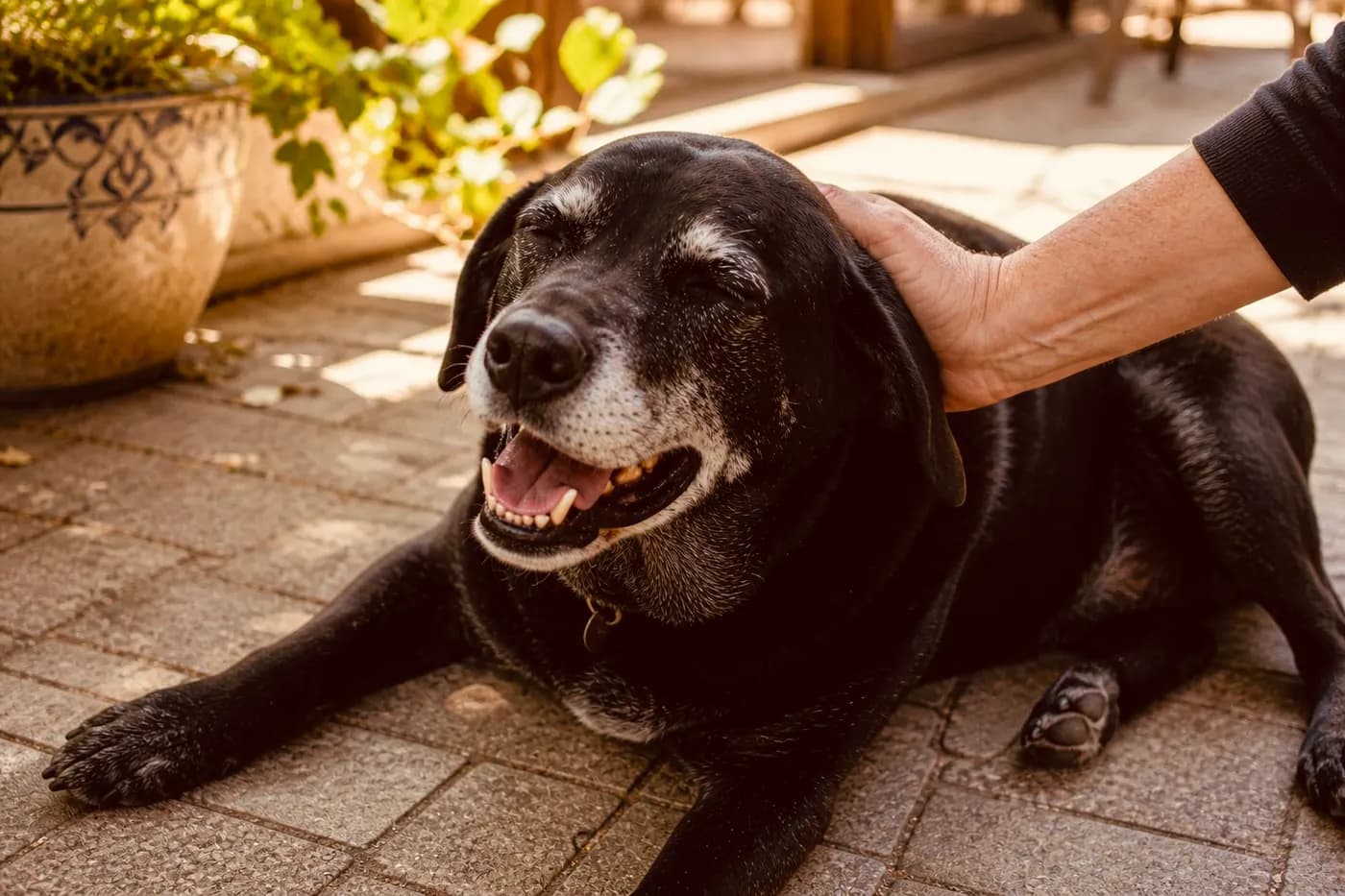
- Lean dogs live up to 2.5 years longer than overweight dogs — weight is the single biggest lever most owners can pull
- Social connection matters more than almost anything else: the Dog Aging Project found its effect on health was five times stronger than financial factors
- Enrichment slows cognitive decline: exercise, novel experiences, and mental stimulation keep older dogs sharper for longer
- The longest-lived dogs on record shared active, socially rich, varied lives — not pampered, sedentary ones
- You can’t control genetics. But you can control almost everything else on this list.
The Weight Question
If there’s one thing the research is unambiguous about, it’s this: lean dogs live longer.
A landmark 14-year Purina study followed matched pairs of Labrador Retrievers from puppyhood to end of life. The dogs kept at ideal body condition lived a median of 1.8 years longer than their slightly overfed counterparts — a 15% extension in lifespan. The lean dogs also needed treatment for chronic conditions like osteoarthritis an average of three years later.
A separate study of more than 50,000 dogs across 12 popular breeds found overweight dogs lived up to two and a half years less than dogs at healthy weight. The effect showed up in every breed, from Yorkshire Terriers (2.5 years shorter) to German Shepherds (5 months shorter).
The uncomfortable truth is that most owners don’t recognise when their dog is overweight. Estimates suggest more than half of pet dogs carry excess weight. If you can’t easily feel your dog’s ribs with light pressure, or can’t see a waist when you look from above, your dog may be heavier than they should be. Addressing that — gradually, with your vet’s guidance — is probably the single highest-impact thing you can do for their longevity.
Social Connection
The Dog Aging Project — one of the largest studies of companion dog health ever conducted, with more than 50,000 dogs enrolled — has produced a finding that should change how we think about what dogs need: the effect of social companionship on dog health was five times stronger than the effect of financial or household factors.
Dogs with more social connections — not just other dogs, but humans, cats, and even birds and other household animals — had fewer reported medical diagnoses including osteoarthritis, allergies, and gastrointestinal disease. Social companionship keeps dogs cognitively engaged, reduces chronic stress, and appears to have a genuinely protective effect on health — the bond itself is measurably protective.
This isn’t surprising if you think about it from the dog’s perspective. Dogs are a social species. Isolation, boredom, and lack of interaction are stressors. And chronic stress shortens lives — in dogs, just as in humans.
What does this mean practically? It means the dog who goes to the park and has regular playmates, the dog who lives in a household with other animals, the dog whose owner makes time for genuine daily interaction — that dog isn’t just happier. They’re likely to be healthier and live longer.
Exercise — but the Right Kind
Physical activity is consistently linked to better cognitive health, fewer medical diagnoses, and lower rates of obesity. The Dog Aging Project data shows that less active senior dogs have significantly higher cognitive dysfunction scores, while those maintaining regular movement fare better across memory, attention, and adaptability.
But it’s not just about volume. Variety matters. A dog who walks the same route every day gets physical benefit but limited mental stimulation. A dog who explores different environments gets both. The sensory novelty of a new place activates the brain in ways a familiar path doesn’t. If you’ve read why sniffing matters, you’ll recognise this: the richness of the environment matters as much as the distance covered.
The practical takeaway: move your dog regularly, and change it up when you can.
Mental Stimulation and Enrichment
A landmark longitudinal study on beagles showed that combining environmental enrichment — regular exercise, social interaction, novel toys, and cognitive challenges — with an antioxidant-rich diet significantly improved learning performance and slowed age-dependent cognitive decline. The dogs receiving both enrichment and dietary support performed better than those receiving either alone.
This is one of the strongest findings in canine ageing research: enrichment and good nutrition together are more effective than either on its own. An enriched life doesn’t just make the years better. It makes more of them.
What counts as enrichment? Scent work. Puzzle feeders. Training new skills at any age. Novel environments. Social play with compatible dogs. Even something as simple as rotating toys rather than leaving the same ones out permanently — the novelty itself has value.
The dogs who stay sharpest longest tend to be the ones whose lives keep offering something new.
Diet — What Actually Matters
The evidence on canine diet and longevity is less settled than the exercise and weight data, but a few findings are consistent. Dogs fed less frequently appear to have better health outcomes — the Dog Aging Project found that dogs fed once a day had lower cognitive dysfunction scores and fewer gastrointestinal and orthopaedic diagnoses, though this is observational. Antioxidant-rich diets have shown genuine cognitive benefits in ageing dogs, particularly when combined with enrichment.
Beyond that, the strongest dietary advice is also the simplest: feed an appropriate amount of quality food, maintain a healthy weight, and avoid the slow creep of treats and extras that adds up over months and years. Your vet is the best source of specific advice for your dog.
What the Longest-Lived Dogs Had in Common
Every dog owner wonders how long their breed can really live. The record holders are eye-opening — and the patterns among them are more interesting than the numbers alone.
Bluey, an Australian Cattle Dog from Victoria, is the verified oldest dog on record at 29 years and 5 months. She worked cattle and sheep for more than two decades. Maggie, an Australian Kelpie, reportedly lived to 30 on a dairy farm in Victoria (unverified by Guinness but widely reported). Bramble, a Border Collie from the UK, made it to 25. Snookie, a Pug from South Africa, reached 27. Adjutant, a Labrador Retriever, lived to 27 as a gamekeeper’s dog in the UK. Augie, a Golden Retriever from Tennessee, lived to 20 years and 11 months — nearly double the breed average of 10–12 years, making her the oldest Golden Retriever ever recorded. Even Toy Poodles have pushed the limits, with Seamus reaching 20.
The common threads aren’t exotic. These dogs lived active lives with daily purpose or engagement. Several lived on farms or rural properties with varied routines and regular interaction with other animals and people. They ate moderately. They moved regularly. None of them lived pampered, sedentary indoor lives.
That’s not a prescription to move to a farm. It’s a reminder that the ingredients of a long life — movement, variety, connection, purpose, moderate feeding — are available to any dog owner willing to provide them.
The Thing Nobody Talks About: Vaccination
This might seem obvious, but it’s rarely stated plainly in the longevity conversation: modern vaccination is one of the foundations of why dogs live as long as they do today.
Before effective vaccines existed — and the core canine vaccines have only been developed in the last 40–50 years — diseases like distemper and parvovirus killed enormous numbers of dogs, especially puppies. Parvo alone, which emerged in the late 1970s, was devastating before vaccines became widely available. Distemper was once one of the leading causes of death in dogs worldwide.
UK data shows that the average age of dogs increased by 25% over a 25-year period, with the proportion living past 8 years rising from 24% to 34%. Improved veterinary care and nutrition contributed, but vaccination against the diseases that used to kill dogs young was a fundamental shift. Vaccinated dogs live significantly longer than unvaccinated ones — not because vaccines are magic, but because they remove the diseases that historically cut lives short before enrichment, diet, or exercise ever got the chance to matter.
Keeping your dog’s core vaccinations up to date isn’t a lifestyle choice. It’s the baseline that everything else on this list builds on.
What You Can Actually Do
This isn’t a list of expensive interventions. It’s a list of daily choices that compound over a lifetime.
- Keep your dog lean. This is the single most evidence-backed longevity lever. If your dog is overweight, work with your vet to address it gradually.
- Move them regularly, and vary the route. Different environments, different surfaces, different smells. Physical exercise and sensory novelty together.
- Maintain social connections. Regular playmates, time with other animals, genuine daily interaction with you. Social dogs are healthier dogs.
- Keep their mind working. Scent games, puzzle feeders, learning new things at any age. Mental stimulation slows cognitive decline.
- Feed appropriately. Quality food, measured portions, limited extras. The slow creep of overfeeding is one of the biggest silent risks.
- Don’t stop exploring. New places, new experiences, new challenges — even small ones. Novelty is one of the strongest tools for building a happier, more resilient dog. A farm visit, a first snow trip, or simply a new park changes the sensory landscape entirely.
- Keep vaccinations current. Core vaccines against distemper, parvo, and adenovirus are the foundation. Everything else on this list matters more because vaccination removed the diseases that used to kill dogs young.
- See your vet regularly. Preventive care catches problems early. Early intervention extends good years.
None of these things are dramatic. All of them matter. And together, they add up to something more than the sum of their parts: a dog who isn’t just living longer, but living better for longer.
The research is clear and the direction is consistent. Happier dogs tend to live longer. The things we do to enrich their lives — the walks, the variety, the play, the connection — aren’t just making today better. They’re building more tomorrows.